
The short version
- Weigh and measure the finished package, including protective material and the mailer or box.
- Match the packaging and label to the service and the marketplace order.
- Check the item and address, keep a drop-off record and confirm tracking on the order.
To ship clothing within the US, inspect the sold item, choose suitable packaging, weigh and measure the finished parcel, use the correct order label and check tracking after handoff. Start this routine before your first sale, so you are not estimating postage with a sweater in one hand and a deadline in the other.
This guide covers ordinary domestic clothing orders. It does not set postage prices: compare current options using the actual parcel, destination and marketplace order.
1. Plan the package before publishing
Keep a few packaging sizes you actually use, a scale and a measuring tape near your packing area. You do not need a warehouse’s worth of supplies to send your first ten orders.
Try packing representative items before listing them. A light shirt, heavy sweatshirt and structured jacket may need different arrangements. Note the package dimensions in inches and the packed weight in ounces or pounds.
These are starting points for choosing protection, not fixed postage categories:
| Item | Packaging to consider | Check carefully |
|---|---|---|
| Soft T-shirt | Suitable durable mailer | Secure closure and room to open it safely. |
| Bulky sweatshirt | Larger mailer or appropriately sized box | Finished thickness, weight and seam strain. |
| Structured or delicate garment | Box with suitable protection | Shape, trims and movement inside the box. |
| Several clothing pieces | Package sized for the whole order | Combined weight and the order’s label coverage. |
If shipping eats more of the sale than expected, revisit the used-clothing pricing worksheet.
2. Match the physical item to the order
Open the order in the marketplace and match it to your stock code. Confirm the size, color and condition against the listing before sealing the package.
Give pockets, fasteners and visible surfaces a final check. Send clothing clean and fully dry, with care appropriate to the garment. If you discover a new flaw, resolve it with the buyer through the marketplace before dispatching.
For an item offered on two stores, remove the other listing and confirm the change before moving on. Our double-selling checklist covers that routine.
3. Protect the garment without overpacking
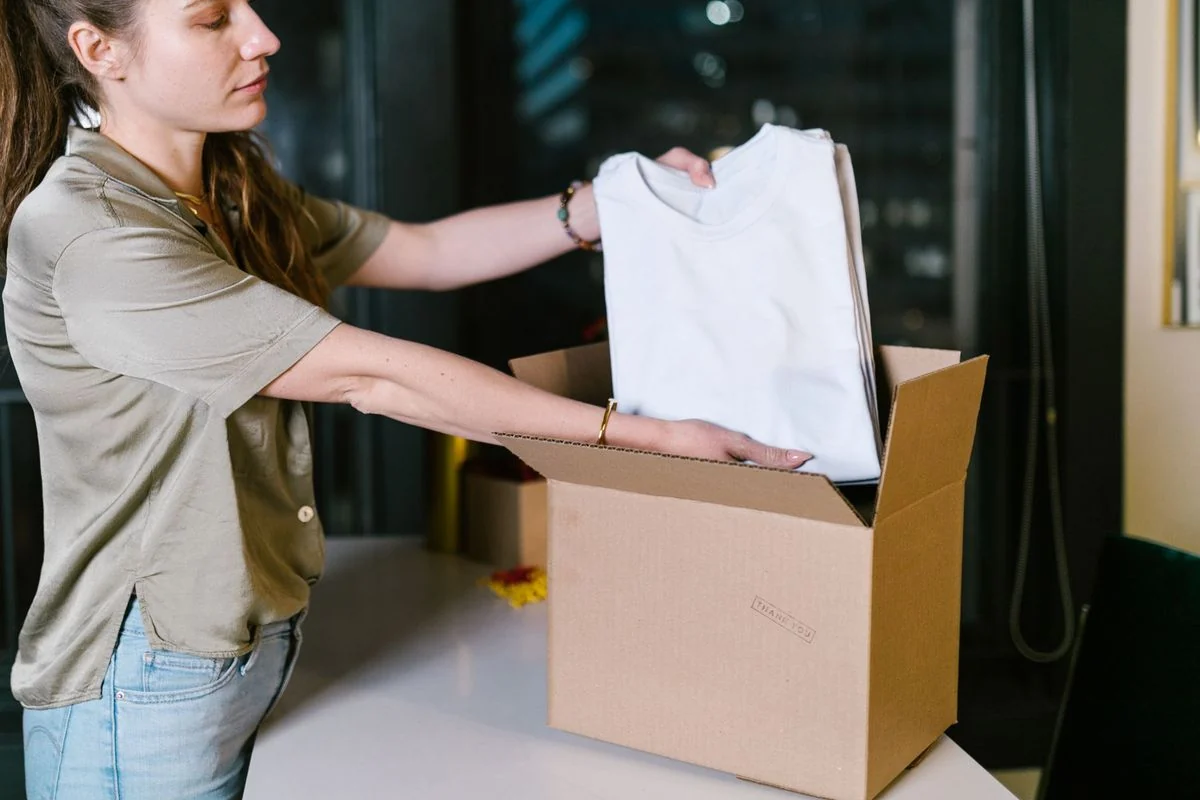
Fold the item so that closures and decorative details will not damage the fabric. Choose a package that protects it and closes securely without forcing the seams.
Consider an appropriate inner layer for moisture protection. Keep tape and sticky labels off the garment itself. A thoughtful packing job should also let the buyer open the parcel without cutting straight into their purchase.
Avoid a large box just because it happens to be nearby. Extra space can mean more movement, more filling and different shipping costs. Equally, do not squash a structured piece into a tiny package simply to chase a cheaper quote.
USPS’s package preparation guide explains its packing and addressing requirements. Follow the rules for the carrier and service you select.
4. Weigh and measure the finished parcel
Put everything that will travel on the scale: item, protective layer, mailer or box and inserts. Measure the final exterior dimensions after closing the package.
An imaginary packing check might look like this:
Sweatshirt alone: 14 oz. Packaging and protection: 3 oz. Finished parcel: 17 oz.
That parcel is over one pound. The garment’s original 14-ounce weight is not the weight to enter when buying its postage.
USPS Ground Advantage uses specified weight bands below one pound and pound-based pricing above that, with package characteristics and destination affecting the quote. Use the current label tool’s instructions for rounding and dimensions. Do not round down to squeeze into a cheaper band.
Save the measurement method with your listing workflow. If you later combine items into one order, pack and weigh the bundle again instead of assuming the original label still fits.
5. Use the service and label for this order
Check the shipping option shown on the marketplace order. If the order provides a label, review its service and parcel details before using it. Do not buy a second label by habit or substitute one from another order.
For Depop labels, its USPS shipping policy for US sellers requires accurate parcel information and shipment to the address on the receipt. Use the available order flow if something needs correcting; do not improvise an address change from a message.
If you are arranging the shipment yourself through the order’s supported process, compare live quotes for the real parcel. Consider tracking and delivery needs alongside the price. There is no single cheapest service for every garment and ZIP code.
Match branded packaging to its service too. USPS’s packaging rules restrict its Priority Mail and Priority Mail Express supplies to the class marked on them. Use permitted packaging for Ground Advantage rather than a Priority Mail box turned inside out.
6. Do a label-to-item check before handoff
Keep each parcel with its own order while packing. Two similar mailers on the desk are an excellent reason to slow down for ten seconds.
Before the parcel leaves, check:
- The stock code matches the physical item and marketplace order.
- The address matches the order’s authorized shipping details.
- The label is readable, secure and belongs to this parcel.
- Package weight, dimensions and service are accurate.
- You can meet the dispatch commitment shown on the order.
Keep a drop-off or acceptance record where available, and confirm that tracking is attached to the order. If tracking does not appear, check the label and carrier record before assuming a buyer can follow the shipment.
Finally, mark the stock as shipped in your own records. A simple home inventory system keeps that final step connected to the next sale.
Common questions
Should I weigh the clothing or the finished package?
Use the finished package when buying postage. Include the garment, mailer or box, protective material and anything else traveling with it. An unpacked garment’s weight can underestimate the shipment.
Can I use a free Priority Mail box for Ground Advantage?
USPS-provided Priority Mail packaging is for the service marked on it. Use suitable packaging allowed for Ground Advantage instead; turning a Priority Mail box inside out does not change its service restriction.
Is a poly mailer suitable for every clothing order?
No. It may suit a soft garment that does not need rigid protection, but structured pieces, delicate details or a bundle may need a suitable box. Choose packaging for the actual item and check carrier requirements.